Kolibest: A Bold Serif Font for Scroll-Stopping Brand Content
As a marketing specialist who builds campaigns across Instagram, YouTube, email, and digital ads, I don’t just pick fonts—I pick strategic tools. Kolibest is one of those rare serif fonts that delivers immediate impact without sacrificing clarity or versatility. It’s not a background player; it’s the confident voice behind your headline, the visual anchor in your thumbnail, and the personality-packed signature in your logo mark.
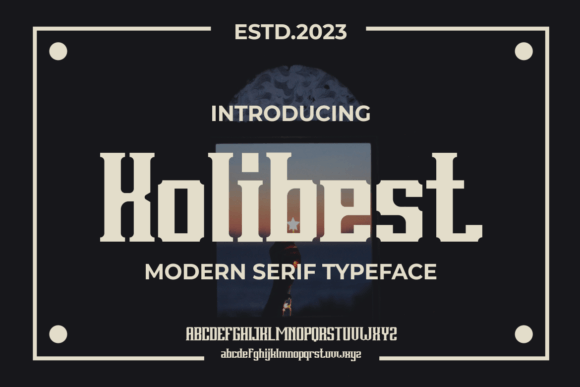
Kolibest is a bold, high-contrast serif font with strong serifs, generous x-height, and subtle calligraphic warmth. It feels both timeless and contemporary—authoritative like a premium magazine masthead, yet expressive enough for esports branding or limited-edition apparel drops. Its letterforms carry weight and intention: uppercase letters command attention, while lowercase characters retain legibility even at small sizes. That balance makes Kolibest especially effective where first impressions matter most—in fast-scrolling feeds, tiny mobile previews, and split-second thumbnail decisions.
In social media graphics, Kolibest shines as a display font for headlines, reel covers, and Pinterest pin titles. Its strong vertical stress and open counters ensure readability at thumbnail scale—even on low-resolution screens or compressed platform previews. Try it for a YouTube webinar banner: “Join the Strategy Shift” in Kolibest over a muted gradient creates instant hierarchy and credibility. Pair it with a clean sans serif (like Inter or Poppins) for body text or captions, and you’ve got editorial-grade contrast that guides the eye without visual fatigue.
For Instagram carousels and Stories, Kolibest works powerfully in short bursts: sale announcements (“48-HOUR FLASH SALE”), product teasers (“Coming Soon: The Studio Edit”), or motivational hooks (“Your Audience Is Waiting”). Because it’s a serif font built for visibility—not delicacy—it holds up against busy backgrounds, textured overlays, or motion blur in animated reels. Unlike overly ornate script fonts or fragile thin serifs, Kolibest delivers consistent presence across formats, from static banners to dynamic ad creatives.
When building brand recognition, consistency is non-negotiable—and Kolibest supports that through intentional repetition. Use it exclusively for primary headlines, logo lockups, and campaign taglines across all touchpoints. That repetition trains your audience: when they see Kolibest, they associate it with your voice—whether that’s bold, refined, energetic, or trustworthy. For small business teams launching seasonal promotions, this kind of typographic anchoring builds familiarity faster than color or icon alone.
It’s also highly effective in email headers and landing page hero sections. On mobile, where 60%+ of email opens happen, Kolibest’s generous spacing and sturdy letterforms prevent crowding and improve scannability. A subject line preview rendered in Kolibest stands out in an inbox cluttered with generic system fonts. Likewise, on a Shopify promo banner, “Summer Drop Live Now” in Kolibest—paired with ample whitespace and a single accent color—creates urgency without shouting.
For content creators producing quote graphics or branded templates, Kolibest adds gravitas without stiffness. An inspirational line like “Clarity starts with courage” gains quiet authority when set in Kolibest at 32pt on a neutral background. Its subtle humanist rhythm avoids robotic uniformity, making messages feel more personal and less templated—critical for audience engagement in saturated feeds.
That said, Kolibest isn’t meant for long paragraphs or dense UI labels. It’s a premium font designed as a display serif—ideal for headlines, logos, callouts, and short-form emphasis. Think of it as your typographic spotlight: use it where you want focus, not filler. For body copy, pair it deliberately: a neutral sans serif ensures accessibility and flow, while a complementary serif (like Playfair Display or Lora) can deepen an editorial or luxury aesthetic—just keep contrast in mind to maintain hierarchy.
Readability on mobile remains a top priority. Test Kolibest at 24–28pt for reel covers and 36–48pt for YouTube thumbnails. Avoid tight tracking or extreme all-caps settings unless intentionally stylized—its strength lies in balanced proportions, not forced compression. And always preview on actual devices: what reads clearly on desktop may tighten or blur on iOS or Android previews.
Commercial use matters—especially for agencies, freelancers, and brands distributing templates, merch, or ad assets. Before dropping Kolibest into client campaigns, Shopify product pages, or T-shirt mockups, verify its commercial license covers your intended use case. Some serif fonts restrict redistribution or merchandise usage; Kolibest’s licensing clarity helps avoid last-minute redesigns or legal friction down the line.
Real-world examples? A fitness coach uses Kolibest for their “30-Day Reset” challenge banner—paired with a warm sans serif for dates and details. A boutique skincare brand applies it to limited-edition packaging and Instagram Story countdowns, reinforcing premium positioning. An indie game studio chooses Kolibest for its esports tournament logo and Twitch overlay, balancing tradition with edge. In each case, the font doesn’t just look good—it communicates tone, signals intent, and reinforces memory.
Ultimately, Kolibest supports smarter marketing communication because it merges function with distinctiveness. It’s not about being “trendy”—it’s about being reliably effective across platforms, audiences, and objectives. When your visuals compete for seconds—not minutes—every typographic choice must earn its place. Kolibest does.
- Best for: Headlines, logos, thumbnails, banners, promo graphics, and branded templates
- Avoid for: Long-form body text, interface labels, or ultra-small annotations (<14pt)
- Strong pairings: Inter, Poppins, Montserrat (for contrast), or Lora, Crimson Text (for serif-on-serif depth)
- Licensing tip: Confirm commercial rights before using in ads, client deliverables, merchandise, or digital products